DeepTalks is an Android application game inspired by the conversational essence of the Indian card game "Guftagu Karein?" Aiming to foster genuine connections among artists, DeepTalks prompts meaningful discussions through a diverse array of thought-provoking categories. The game encourages participants to share personal experiences, engage in deep conversations, and explore seldom-discussed topics within a community of artists. Utilizing both AI-generated images and prompts, DeepTalks creates a unique space for artists to come together, exchange perspectives, and strengthen connections through the power of thoughtful dialogue.

We crafted a unique instrument, the Bottle Tarang, inspired by the ancient Jal-tarang, and translated its sounds into a digital format using Python. This project explores the fusion of programming and music theory, bringing the essence of Hindustani classical music, specifically the Bhoopali Raag, into a digital format. The core of the project involves a Python program that generates a MIDI file representing a bandish in the Bhoopali Raag. Leveraging libraries like midiutil and mingus, the program converts predefined note progressions into MIDI notes. The recorded sounds of the Bottle Tarang are then sampled onto a MIDI channel, creating a digital representation of the instrument.
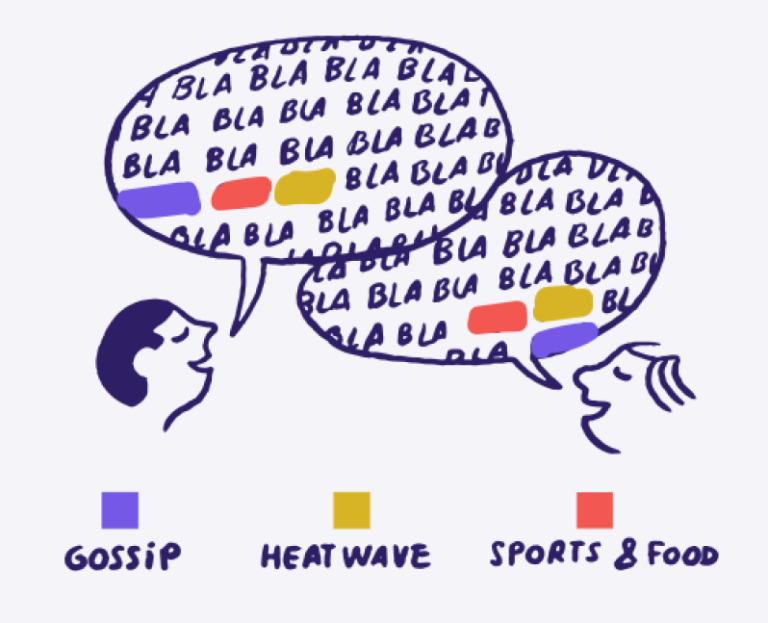
This project, employing advanced natural language processing techniques, leverages Latent Dirichlet Allocation (LDA) for topic modeling in a dataset containing over 500 reports.
Pandas facilitated seamless data manipulation, while spaCy ensured robust text preprocessing. Gensim played a central role in building the LDA model, creating a dictionary, and generating a bag-of-words representation. Matplotlib, seaborn, and pyLDAvis provided insightful visualizations, aiding in the interpretation of identified topics.
The project highlights the potential for automated insight extraction in large text datasets, offering valuable implications for information retrieval.

This project employs a robust neural network model, utilizing NLTK, Pandas, NumPy, TensorFlow, Keras, and Scikit-Learn, to craft a system to automatically categorize news articles as genuine or fake.
The workflow comprises loading the dataset, preprocessing the text, applying one-hot encoding, and training the model along with a detailed exploration of the neural network architecture—crucial steps in constructing an effective Fake News Classifier to combat misinformation in news articles.
This project delves into the realm of sentiment analysis applied to Amazon India-related tweets, using natural language processing techniques. By employing libraries like NLTK, pandas, and wordcloud, the analysis provides insights into customer sentiments, aiding Amazon in understanding perceptions, identifying areas for improvement, and proactively addressing concerns. The project includes a priority section for influential negative tweets, emphasizing the significance of addressing concerns raised by accounts with a substantial following. The applications extend to brand reputation management, real-time customer feedback analysis, and proactive issue resolution.

This project, utilizing the RAVDESS dataset, explores Speech Emotion Recognition (SER) through machine learning. It delves into audio feature extraction, focusing on emotions like anger, calmness, fear, and happiness. Leveraging libraries such as Librosa, Soundfile, NumPy, and Scikit-learn, the project employs a Multi-layer Perceptron (MLP) classifier for emotion classification.
This project lays the groundwork for creating emotionally intelligent systems that enhance user experience across diverse domains. The applications of SER extend to enhancing Human-Computer Interaction (HCI), influencing personalized responses in virtual assistants, customer service interactions, educational software, and mental health monitoring.