Intuitive Website Design for Mental Health Services
Mental health is deeply personal, yet many individuals face barriers like stigma, lack of access, and affordability when seeking support. Metanoia is a platform designed to bridge these gaps by offering therapy services, self-help tools, and community forums in a digital, empathetic, and inclusive space. My role in this project was to design a responsive website tailored to these unique needs, ensuring every user could navigate their mental health journey with ease and confidence.
Timeline
March 2023 - June 2023
Contributions
User Research, Needs Assessment, Content Strategy, Wireframing, Website Design
Want to get up to speed fast?
What did I do?
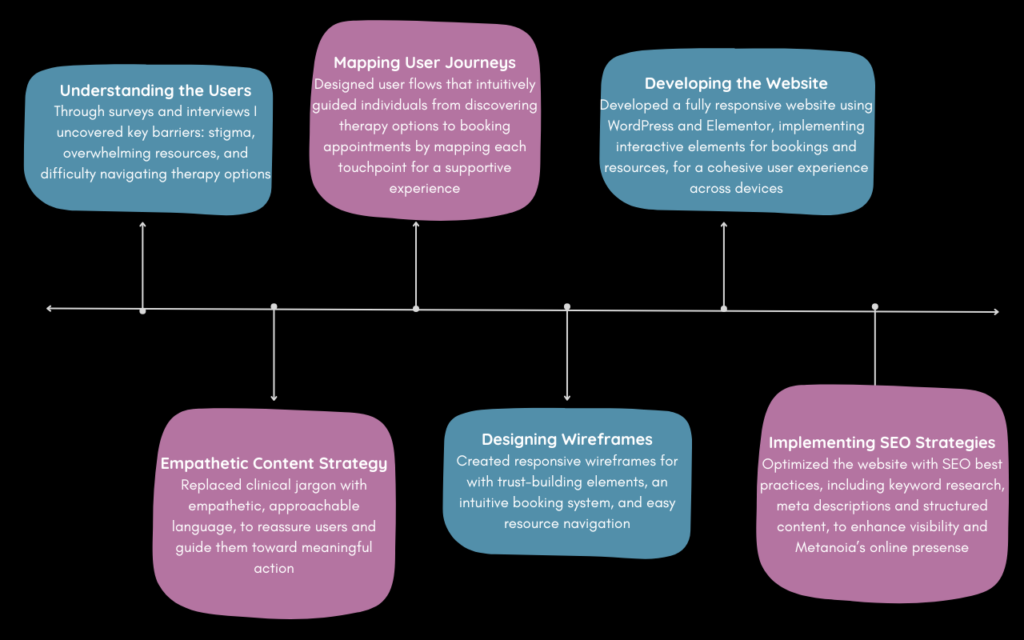
Redesigned Metanoia’s website by analyzing user pain points, mapping user journeys, and creating responsive wireframes that emphasized ease of information access and responsiveness. Worked closely with mental health practitioners and stakeholders to ensure the design aligned with user needs for therapy booking, resources, and support tools.
What impact did it have?
The redesigned platform improved the clinic’s online visibility and resulted in a 30% increase in appointment bookings, making therapy services more accessible.
What did I learn?
This project reinforced the value of designing with empathy in contexts as sensitive as mental health. I learnt the importance of well-structured information and reducing cognitive load to priotitize access to resources.
Project Overview
Collaborators
Mental health practitioners
User research participants
Target Audience
Primary: Individuals seeking affordable and accessible mental health resources (students, professionals, parents)
Secondary: Mental health practitioners looking for a platform to engage with clients effectively
Challenges
Hesitation Due to Stigma: Users expressed discomfort in discussing mental health issues, often feeling judged or isolated
Fragmented Resources: Platforms generally lacked integrated tools for therapy, self-help, and community support
Goals
Create an empathetic, user-centric website for seamless access to therapy, tools, and resources
Address barriers like stigma, cost, and accessibility with clear communication and affordable solutions
Incorporate features like online journaling, community chat and volunteer network to enhance engagement
My Process
Research
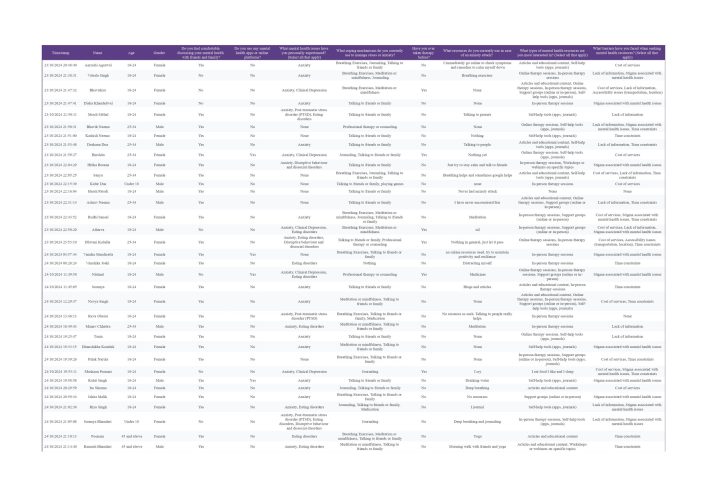
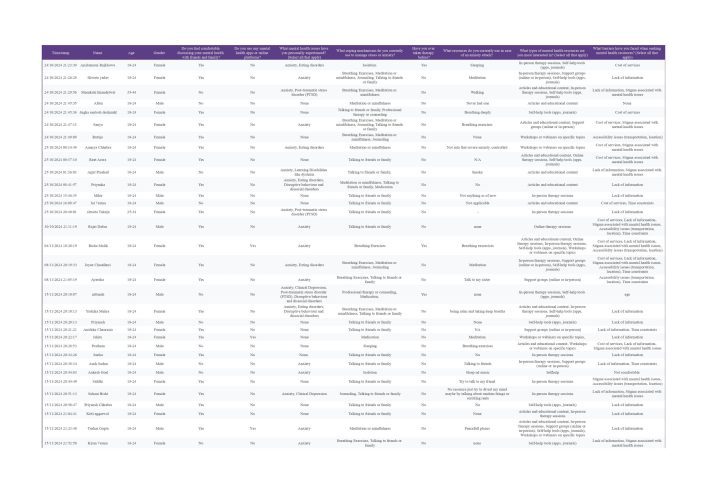
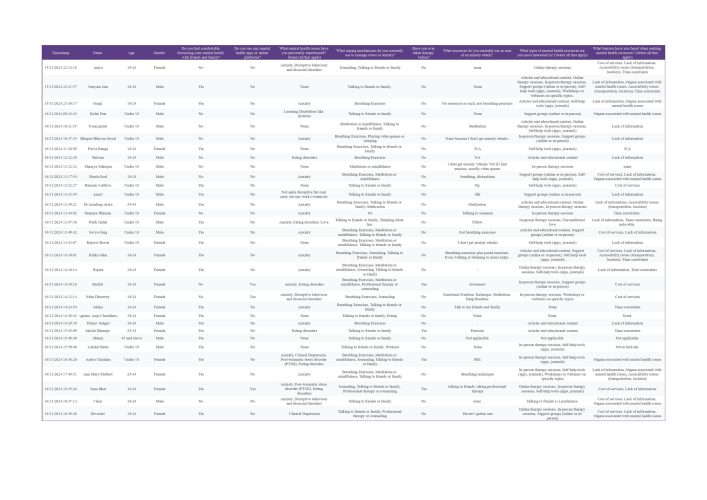
Focused on analyzing user challenges and aligning Metanoia's business goals with their needs through surveys, interviews, and data analysis.
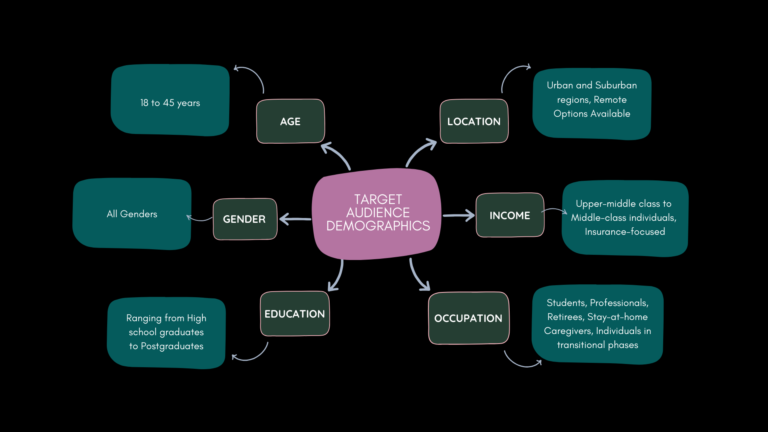
Target Audience
Breaking down the key demographic traits shaping Metanoia's target audience
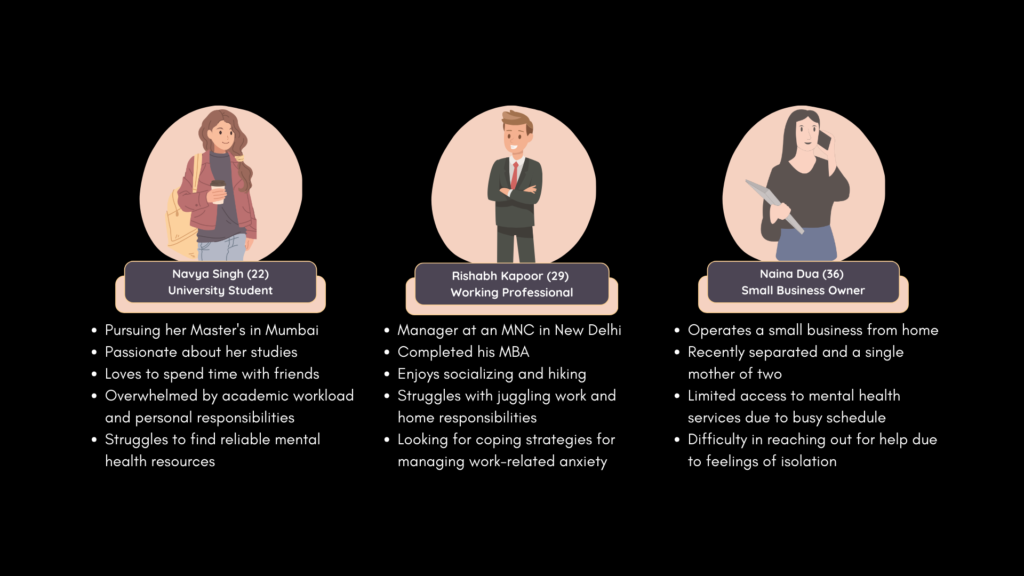
User Personas
Detailed profiles capturing the motivations, challenges, and needs of Metanoia's diverse user base
Target Audience Analysis
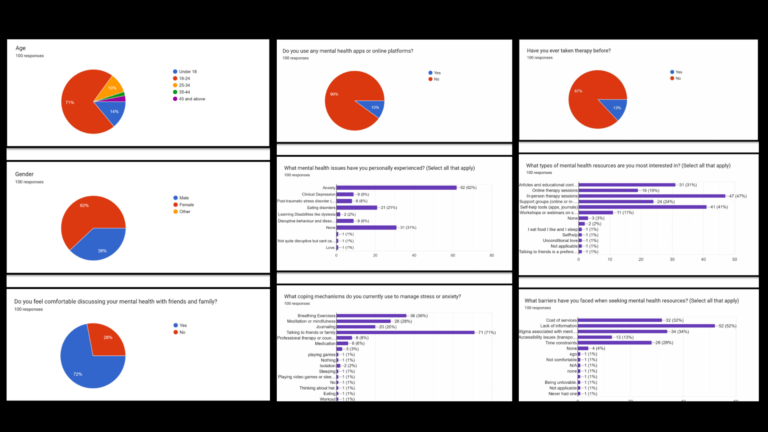
Insights gathered from surveys and semi-structured interviews to understand user needs, challenges, and behaviors for Metanoia's design
Data Analysis & Findings
Key insights from user surveys highlighting mental health challenges and opportunities for intervention
Challenges
72%
are uncomfortable discussing mental health with friends and family
52%
avoid mental health services due to lack of information
34%
cite stigma and cost as barriers to seeking help
28%
face time constraints to access to mental health services
Opportunities
90%
don’t use mental health apps
41%
find tools like journaling and personalized resources valuable
31%
are interested in blogs and podcasts to learn more about coping mechanisms
24%
prefer support groups to share experiences and build connections
Strategy
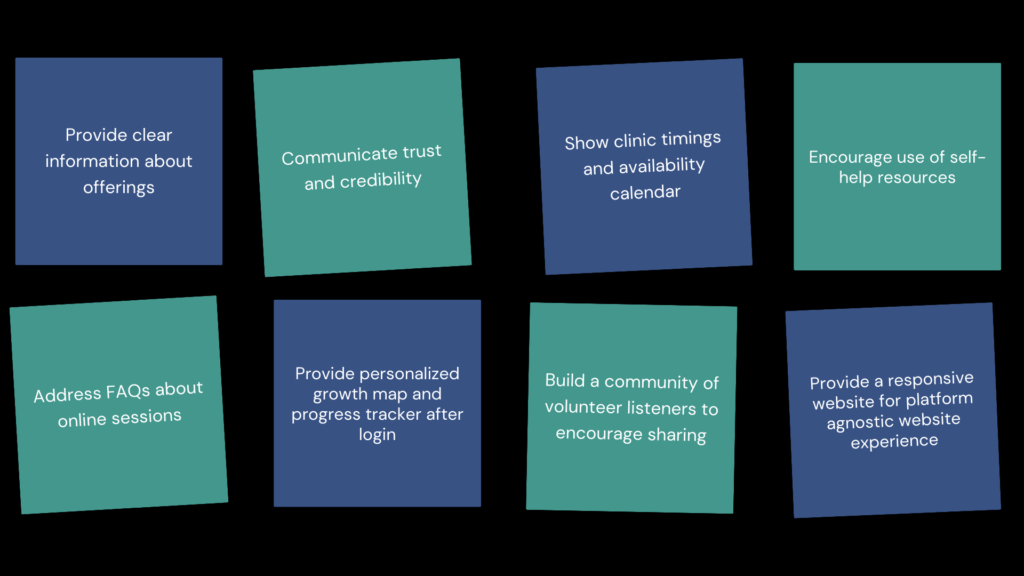
A balanced approach to aligning Metanoia’s brand objectives with user needs for an impactful design
Metanoia’s needs as a Brand
Building trust, visibility, and engagement to position Metanoia as a trusted mental health platform.
Audience’s needs as a Website User
Responsive, intuitive, and stigma-free space that simplifies access to mental health support and resources
Sitemap
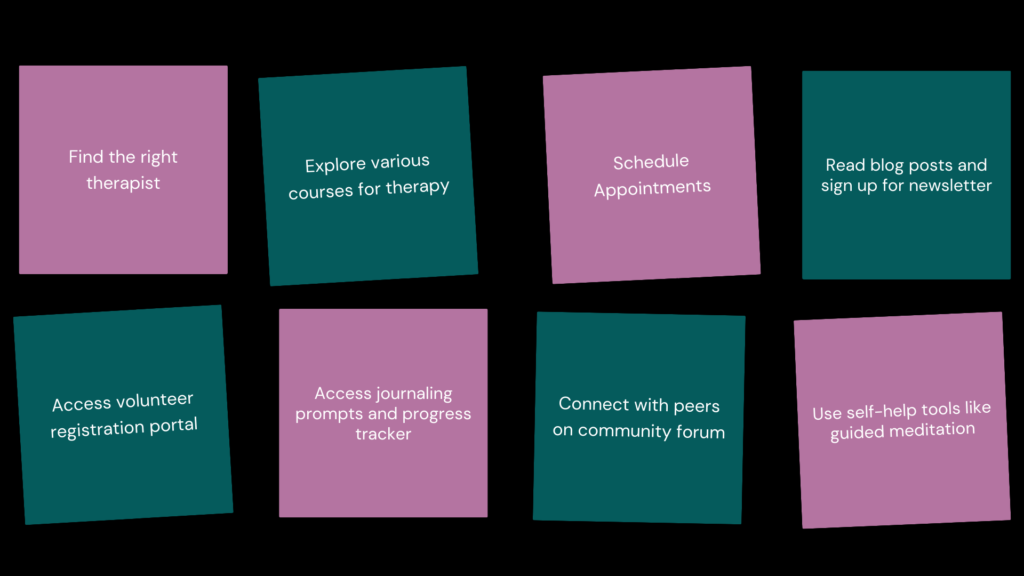
A clear structure outlining Metanoia's website navigation to ensure seamless access to therapy, resources, and support
Wireframes
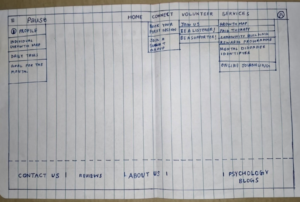
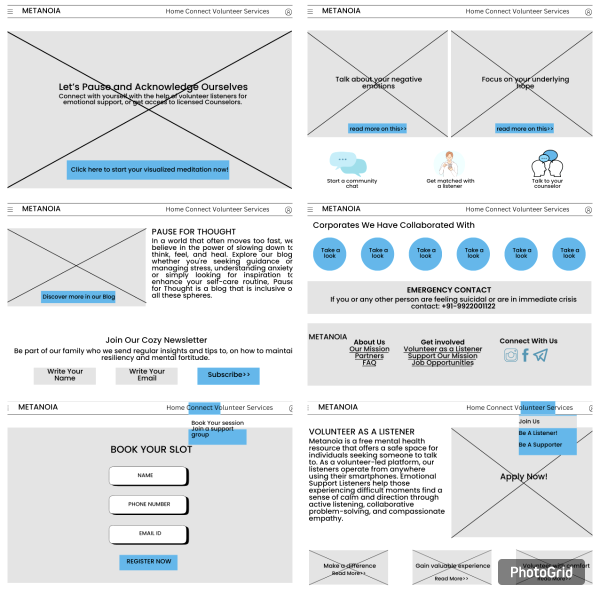
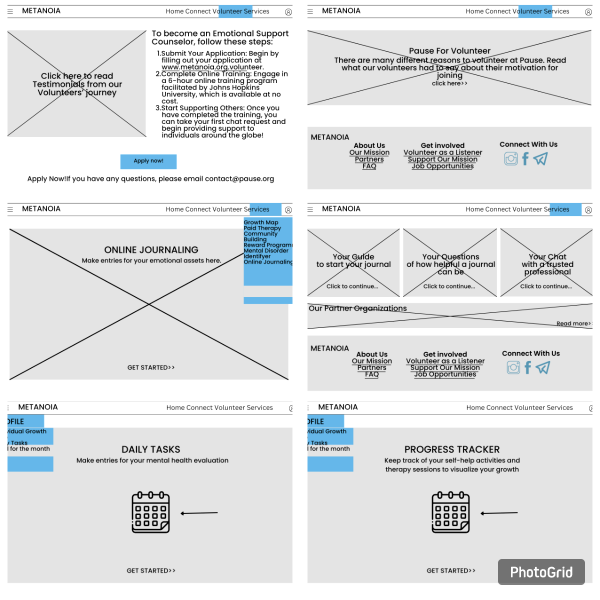
Responsive wireframes for desktop and mobile, focusing on intuitive navigation, ease of access for resources and streamlined therapy booking flows
Website Development
The design came to life through WordPress and Elementor, creating a responsive and user-friendly platform tailored for both desktop and mobile users. Each page was designed to reflect Metanoia’s mission of offering supportive resources, easy access to therapy services, and a welcoming digital space for mental health support.
The result? A website that feels as seamless as it is supportive.
Metanoia demonstrates that thoughtful design and empathetic technology can make mental health support accessible and impactful. By addressing barriers with user-first solutions, it inspires individuals to prioritize their well-being.